
- Aasiya Niaz
- 6 Hours ago
Airline ordered to pay Rs 5.14b in compensation after deadly crash
-

- Web Desk
- Dec 23, 2025
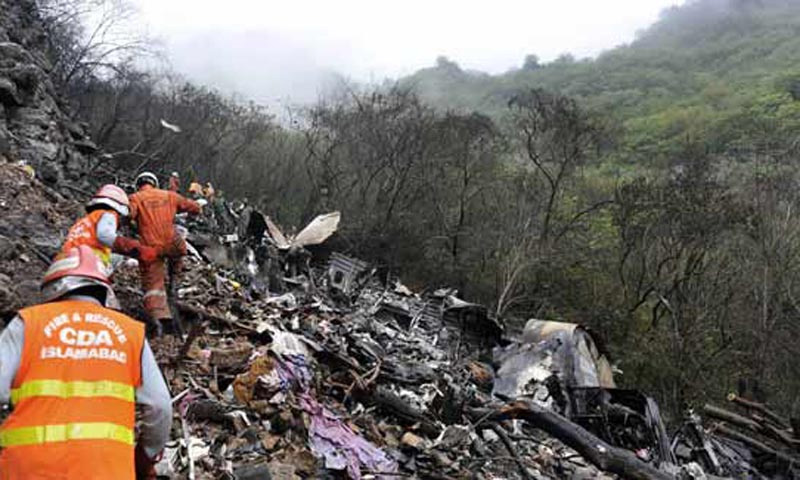
ISLAMABAD: In a landmark verdict following years of legal proceedings, a District and Sessions Court has ordered a private airline to pay more than Rs 5.14 billion in compensation to the families of victims who lost their lives in a tragic plane crash on July 28, 2010.
The court dismissed all eight appeals filed by the airline and upheld the compensation claims of the affected families. In addition to the compensation amount, the court also imposed a fine of Rs 100,000 on the airline for what it described as unnecessary litigation and wasting valuable court time.
The detailed written judgment was issued by Additional District and Sessions Judge Rasool Bakhsh, who ruled that the airline’s appeals had no legal merit and therefore could not be sustained. The judge noted that the evidence on record clearly established responsibility and negligence on the part of the airline.
The case has a long legal history. The families of the victims had initially challenged the decision of a civil judge, after which the matter was taken to the High Court. The High Court later remanded the case back to the Sessions Court, directing it to hear the matter in detail. After extensive arguments from both sides, the Sessions Court finally announced its verdict.
According to the investigation report of the Pakistan Civil Aviation Authority (CAA), the accident was classified as a “controlled flight into terrain.” The report concluded that the flight crew committed serious violations of safety procedures while attempting to land in adverse weather conditions, bringing the aircraft down to an unsafe altitude.
The tragic incident involved Flight 202 of a private airline, which was en route from Karachi to Islamabad when it crashed into the Margalla Hills while attempting to land at Benazir Bhutto International Airport. The crash claimed the lives of 146 passengers and six crew members, making it the deadliest air disaster in Pakistan’s history.
The investigation further identified pilot error, violation of standard operating procedures during the circling approach, poor cockpit resource management, and severe weather as the primary causes of the accident. Subsequent court observations also pointed to shortcomings on the part of air traffic control.
The verdict has been welcomed by the families of the victims, who have been seeking justice and compensation for more than a decade, and is being seen as a significant development in accountability within Pakistan’s aviation sector.
You May Also Like


