
- Aasiya Niaz
- 3 Hours ago
Benazir Bhutto: the price of defiance and the legacy of democracy
-

- Web Desk
- Dec 27, 2025

December 27 marks 18 years since the assassination of Pakistan’s first ever female Prime Minister Benazir Bhutto, a killing that sought to silence a leader but instead cemented a democratic legacy that continues to shape Pakistan’s political journey.
A life lived in the glare of history
The assassination of Benazir Bhutto on December 27, 2007 in Rawalpindi marked more than the death of a former prime minister. It represented a direct attack on the democratic ideal that Pakistan could be governed through popular will, constitutionalism and pluralism rather than violence and extra-constitutional power.
Benazir Bhutto lived her political life under constant threat, fully aware that power in Pakistan often exacts a violent price. From the moment she entered politics after the judicial killing of her father, Zulfikar Ali Bhutto, she carried a legacy forged in resistance. Yet she never chose safety over struggle, nor exile over engagement.
Her politics were rooted in defiance against dictatorship, against extremism and against the notion that civilians must forever defer to unelected power.
Choosing return over refuge
Benazir Bhutto’s return to Pakistan in October 2007 was a conscious and perilous choice. Pakistan at the time was gripped by suicide bombings, creeping Talibanisation and a political order sustained through engineering rather than electoral legitimacy. Within hours of her homecoming procession in Karachi, dozens of her supporters were killed in a devastating attack.
It was a clear warning. She chose to stay.

As senior journalist Hamid Mir later recalled, Benazir repeatedly acknowledged that her life was in danger. “She said she had come back to Pakistan to die,” Mir said, recounting their final meeting weeks before her assassination. She knew the risks but believed dying on Pakistani soil, among her people, was preferable to safety abroad.
That resolve defined her final months. She returned not merely to contest elections, but because she believed Pakistan stood at a crossroads where silence would amount to surrender.
Governing under constraint
Twice elected prime minister, Benazir was not just a symbol of democratic aspiration; she was a governing leader operating under extraordinary constraints. Her first term came after 11 years of military rule and focused on reopening political space. Political prisoners were released, the press was freed, and student and labour unions were revived.

Her second term prioritised institutional rebuilding and social policy. The Lady Health Worker Programme, launched under her government, became one of Pakistan’s most enduring social interventions, transforming maternal and child healthcare for millions. This philosophy of social protection later found institutional form in the Benazir Income Support Programme (BISP), launched after her death.
These were not symbolic gestures but structural attempts to redefine the state’s responsibility towards its citizens.
An uncompromising stand against extremism
What made Benazir Bhutto particularly threatening by 2007 was her clarity. She rejected the dangerous fiction of “good” and “bad” militants at a time when appeasement was politically expedient. She warned that militancy could not be managed, only defeated through democratic legitimacy, civilian authority and the rule of law.
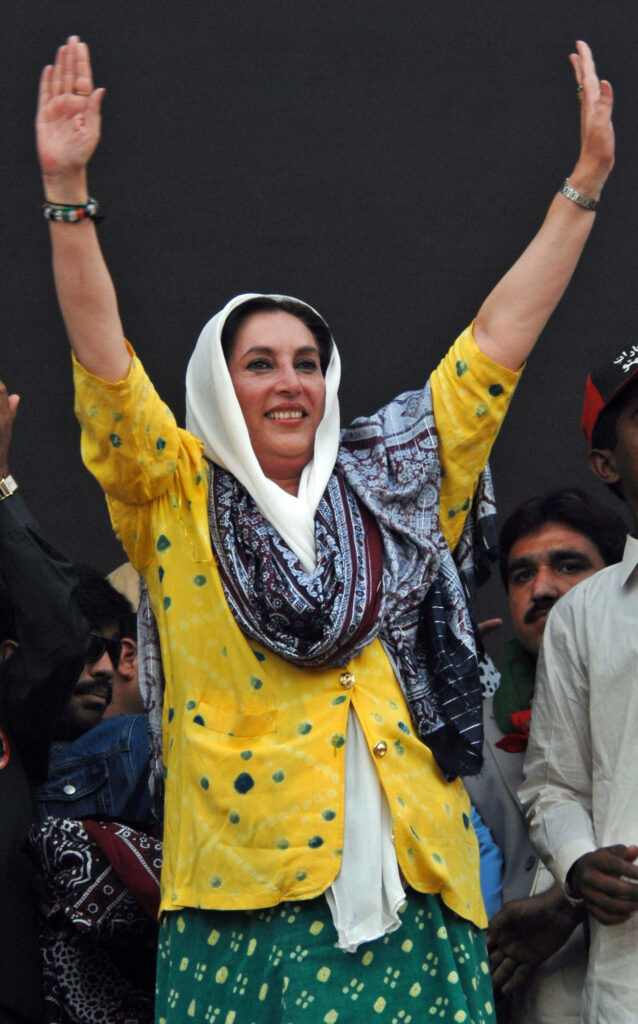
In her final public address in Rawalpindi, she spoke of reclaiming Pakistan from fear, dismantling extremism and restoring the people’s faith in democracy. Moments later, she was assassinated.
Her killing was meant to extinguish that argument.
A nation in grief, a state on trial
The aftermath exposed uncomfortable truths. There were grave security lapses before the attack and the destruction of evidence afterwards. Accountability never truly followed. For many Pakistanis, the lesson was brutal: political violence would go unpunished, and democracy would pay in blood.
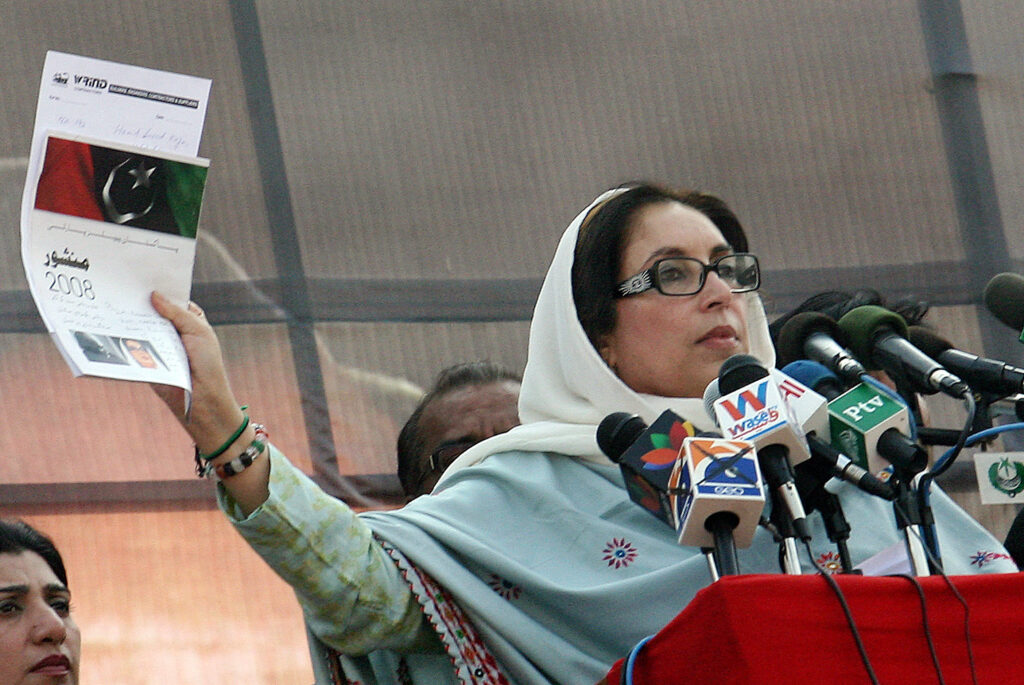
The grief that followed cut across party lines. From villages to major cities, mourning spilled into the streets. Even critics recognised that something irreplaceable had been taken from the country’s political life.
“Democracy is the best revenge”
Faced with national trauma, the Pakistan Peoples Party made a defining choice. President Asif Ali Zardari’s words — “Pakistan Khappay” — were not rhetorical restraint but a political decision to prevent grief from tearing the federation apart. The party chose continuity over chaos, ballots over bullets.

That commitment reshaped Pakistan’s democratic trajectory. Between 2008 and 2013, Pakistan witnessed its first democratic transfer of power between elected civilian governments. The 18th Amendment restored parliamentary sovereignty, strengthened provincial autonomy and rolled back constitutional distortions imposed by repeated authoritarian interventions.
Benazir Bhutto’s vision, in that sense, outlived her.
Legacy across generations
Her legacy did not freeze in martyrdom. It evolved. Her son, Bilawal Bhutto Zardari, assumed the chairmanship of the PPP at just 18, guiding the party through a period of transition before becoming Pakistan’s youngest foreign minister. On the global stage, he articulated a foreign policy rooted in parliamentary diplomacy, climate justice and democratic legitimacy.

Her youngest daughter, Aseefa Bhutto Zardari, today serves as first lady, championing public health, women’s empowerment and social welfare, causes central to her mother’s politics.
This continuity challenges the idea that Benazir Bhutto was an interruption in Pakistan’s history. In reality, she inaugurated a democratic project rooted in constitutionalism and civilian authority.
An unfinished journey
Benazir Bhutto once said democracy is not a destination, but a continuous struggle. Her martyrdom etched that struggle into Pakistan’s collective conscience. She did not live to see the Pakistan she envisioned, but she gave the nation the language to imagine it, and the courage to pursue it.

To remember her is not only to mourn a life lost, but to recommit to the values she stood for: resistance to tyranny, faith in the people and the belief that democracy, however costly, remains Pakistan’s only viable future.
You May Also Like


