- Aasiya Niaz
- 18 Minutes ago
How Pakistan made a strategic comeback on the Global Stage in 2025?
-

- Web Desk
- Yesterday
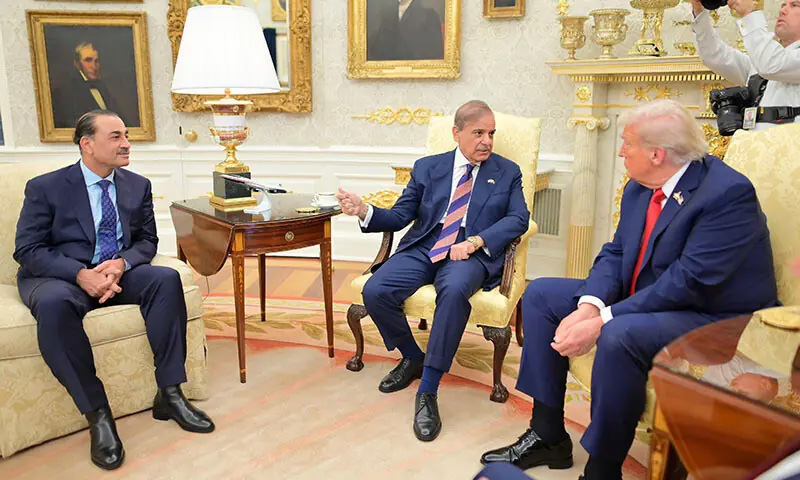
Pakistan’s strategic return to the global diplomatic stage in 2025 has drawn significant attention from analysts at leading international newspapers, with Britain’s The Telegraph highlighting Islamabad’s growing influence in Washington and beyond.
In a detailed article titled “How Pakistan Influenced the White House,” The Telegraph described Pakistan’s diplomatic resurgence as a major victory, crediting decisive military and diplomatic leadership, particularly the role of Chief of Defence Forces (CDF) Field Marshal Syed Asim Munir, who, according to the report, played on the front foot for Pakistan on both military and diplomatic fronts.
The newspaper identified the extradition of the suspect involved in the Abbeygate attack to the United States as a major turning point in rebuilding close ties with the Trump administration. According to The Telegraph, the suspect was sent to the US just two days after his arrest, delivering tangible results rather than symbolic statements. A senior Pakistani official quoted in the report said this moment marked a clear turning point in Pakistan-US relations, while a former US official described it as a powerful signal of Pakistan’s serious intentions.
Former US President Donald Trump, during an address to the US Congress, publicly thanked Pakistan for its practical cooperation in counter-terrorism efforts, a gesture The Telegraph says reflected a major shift in Washington’s tone toward Islamabad. This shift came despite the bitterness that marked Trump’s first term and despite intense Indian lobbying in Washington, which this time failed to prevent Pakistan from gaining a clear diplomatic advantage.
According to the report, Pakistan received better trade tariff concessions than many other countries, while the Prime Minister of Pakistan and Field Marshal Asim Munir gained direct access to the Oval Office, signaling renewed trust at the highest levels. The Telegraph noted that Pakistan’s effective diplomacy significantly changed the atmosphere within the White House.
One of the most unconventional diplomatic moves highlighted in the article was Pakistan’s nomination of Donald Trump for the Nobel Peace Prize, which the paper described as an extraordinary diplomatic step that further strengthened engagement.
The report also revealed that ISIS-Khorasan commander Jafar was a high-priority target in the White House’s counter-terrorism agenda, adding further importance to Pakistan’s cooperation. Field Marshal Asim Munir reportedly met President Trump privately and off the record in June, a meeting that The Telegraph openly recounted. According to the paper, the Field Marshal made a strong impression on Trump, who continued to praise him even after the meeting.
Trump later publicly referred to Field Marshal Asim Munir as his “favourite field marshal” during discussions surrounding the Gaza ceasefire, underscoring the depth of personal rapport between the two.
Beyond Washington, The Telegraph said Pakistan has established itself as an effective and responsible strategic partner in the Middle East, citing Islamabad’s close ties with GCC countries and its balanced relationship with Iran as major diplomatic advantages.
The report further noted that Pakistan offered a practical solution to the United States on access to critical minerals, leading to the signing of a Memorandum of Understanding in September on mineral reserves estimated to be worth six trillion dollars, a development described as a major global surprise.
Amid rising regional tensions following the Pahalgam incident in Kashmir, The Telegraph warned that the risk of war has reached a real and serious level. While India openly rejected the possibility of US mediation, Pakistan was praised for adopting a responsible and measured approach, managing relations with the White House through unconventional but effective diplomacy.
Concluding its analysis, The Telegraph stated that Pakistan’s effective diplomacy has brought it back to center stage in Washington, positioning the country as a trusted partner that delivers results and plays a stabilizing role in regional and global affairs.
You May Also Like