- Web Desk
- 4 Hours ago
Lebanese president, Hezbollah lock horns over expanded talks with Israel
-

- Reuters
- Dec 05, 2025
BEIRUT: Lebanon’s political landscape is facing growing tension after President Michel Aoun defended his decision to expand talks with Israel, while Hezbollah’s leadership called the move a serious mistake, exposing a deep divide at a critical moment for the country.
On Wednesday, both Lebanon and Israel sent civilian envoys to a military committee tasked with monitoring their ceasefire. The step aligns with a long-standing US push, reflecting former President Donald Trump’s Middle East peace plan, to broaden discussions between the two nations.
Speaking to visiting United Nations Security Council representatives, President Aoun said Lebanon had “adopted the option of negotiations with Israel” and insisted “there is no going back.”
“These talks are primarily aimed at halting hostile actions carried out by Israel on Lebanese soil, securing the return of captives, scheduling withdrawals from occupied areas, and resolving disputed points along the Blue Line,” Aoun said in a statement on Friday. The Blue Line refers to the UN-demarcated border between Israel and Lebanon.
Hezbollah Calls Expanded Talks a ‘Blunder’
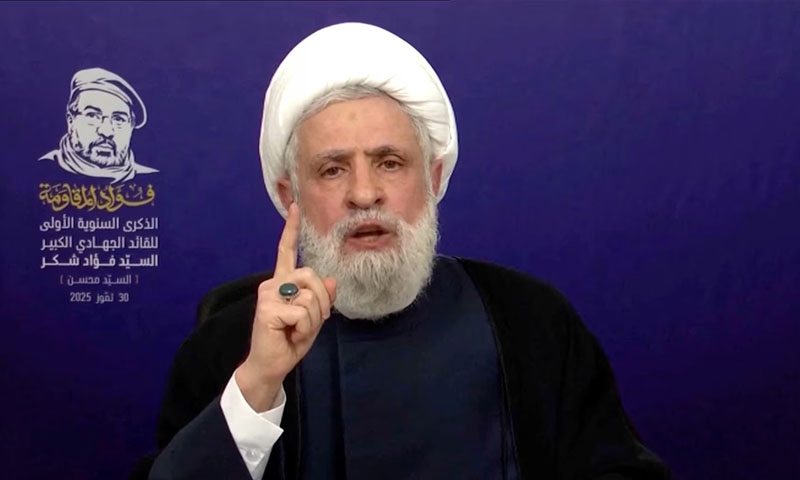
However, Hezbollah strongly opposed the move. Its deputy leader, Naim Qassem, called the sending of a civilian delegate to the truce monitoring committee a “blunder” and urged the government to reconsider.
“You offered a free concession that will not change anything in the enemy’s (Israel’s) position or its attacks,” Qassem said on Friday.
Lebanon and Israel have officially remained enemy states for more than 70 years, and civilian meetings between the two have historically been extremely rare.
Over the past year, military officials from both sides have met under a U.S.-chaired committee to monitor a 2024 truce that ended over a year of conflict between Israel and Hezbollah, which significantly weakened the armed group.
Despite the truce, Israel has continued air strikes, citing Hezbollah’s attempts to rearm in violation of the agreement. Lebanon, in turn, has condemned these strikes and Israel’s occupation of southern territory as breaches of the ceasefire.
There are growing fears in Lebanon that Israel could escalate its air campaign, increasing pressure on the Lebanese government to disarm Hezbollah across the country. The group, however, has refused to disarm fully and warned that any state confrontation could spark internal strife.
You May Also Like