
- Aasiya Niaz
- 4 Hours ago
Moments from Hum TV’s ‘Jama Taqseem’: the cost of keeping families “intact”
-

- Zoya Anwer
- Dec 19, 2025
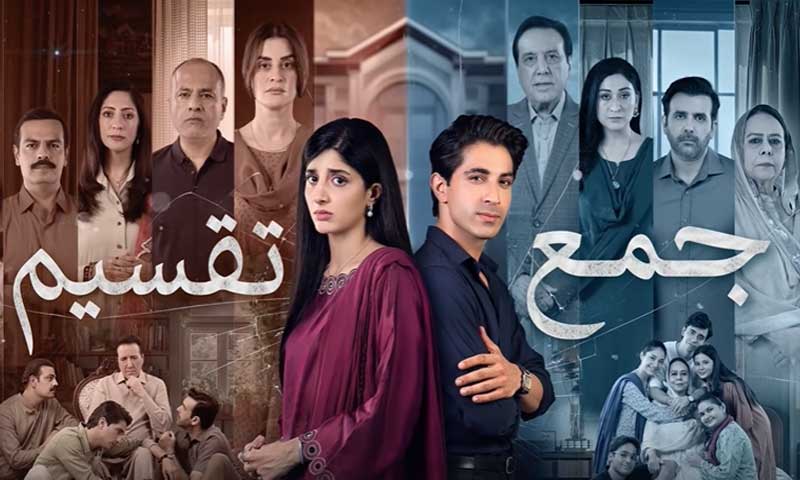
When Hum TV’s drama Jama Taqseem premiered in September, it initially appeared to be just another take on love marriages, the clash between joint and nuclear family systems, and the stereotypes associated with formal education versus lack of it. However, a few episodes in, the drama began tackling deeper issues, including sexual abuse and intimidation within families, the treatment of daughters-in-law based on socioeconomic status, and the misconception that having degrees always translates to being progressive.
Spoilers ahead
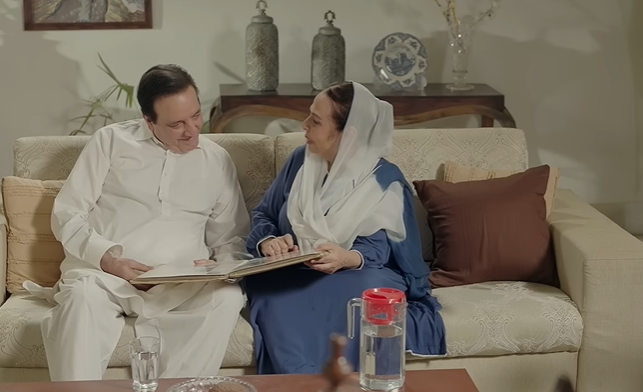
While the ending managed to tie things together, with families reconciling, Jama Taqseem had its mix of strong and weak moments. The drama, which garnered millions of views, revolves around the family of self-made garment factory owner Rafiq (Javed Sheikh), his wife Shahida (Beo Raana Zafar) — often referred to by the names of her sons — and their four children: Hameed (Hassan Ahmed), Majeed, Nudrat (Amna Khan), and Qais (Talha Chahour).
While the three older children are married according to their parents’ wishes, the youngest, Qais, chooses to marry for love, picking Laila (Mawra Hocane), who actually proposes to him. The family is initially shocked but agrees to visit Laila’s family, her parents, Ashar (Deepak Perwani) and Zoobia (Tazeen Hussain), only to realise that their values are completely opposite to Rafiq’s.
Rafiq comes from a very traditional mindset: women are expected to cook, clean, and dress in a certain way, and his word is final in all matters. While the family outwardly presents a façade of harmony, the reality is starkly different, especially when Laila moves in.

Behind the surface of love and wholesomeness, there is tension among the brothers and their wives, Nighat Bhabi (Madiha Rizvi) and Rashida Bhabi (Amna Malik). The cousins who are better off often bully the weaker family members, and Hameed’s son, Zeeshan (Elahi Bux Khan), harasses Sidra (Nazeeha Zainab) until Qais intervenes, causing the household to unravel.

Many viewers appreciated Jama Taqseem for exposing the toxicity of the joint family system and rigid gender roles, where men’s and women’s worlds are neatly divided by patriarchal expectations. At the same time, the drama shows that individuals can flourish when elders’ control is challenged, even within a joint household. As Rafiq says in the end: “In life, learn not just to accumulate, but also to divide [or share be it wealth, relationships or love]; if you learn to share, the accumulation will happen on its own.”
Standout moments in Jama Taqseem
Laila telling Sidra to take a stand
When the family discovers Zeeshan’s harassment, Sidra’s mother breaks down and immediately equates the incident with her daughter’s future and “tarnished” reputation. Laila challenges this mindset, reminding Sidra that constantly relying on others for protection only perpetuates the cycle, and that sometimes women have to stand up for themselves to reclaim agency.
Shahida vs Zoobia
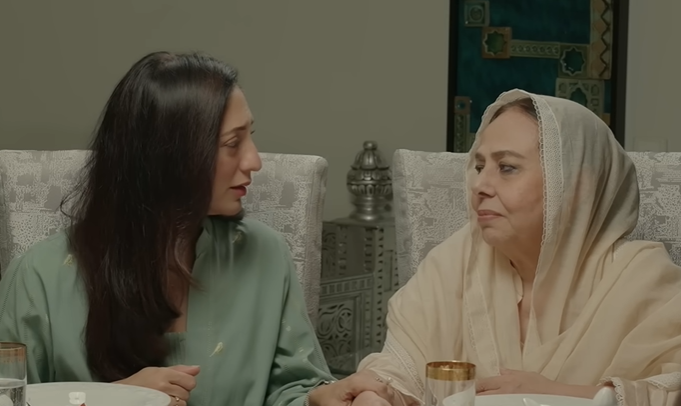
The interactions between Shahida and Zoobia were particularly compelling as both women came from vastly different worlds. While it was somewhat exaggerated that Zoobia forgets to pick up a knife simply because she works, her arguments about household labour being a shared responsibility made sense. Shahida’s eventual growth — letting go of her rigid and outdated beliefs, stemmed directly from these conversations. At the same time, Zoobia’s tendency to measure Laila’s worth solely through employment showed that despite being progressive, she too was inflexible in her thinking.
Nighat realising the importance of independence
When Hameed threatens Nuzhat with divorce as a way to get rid of her brother, Nadir, she is forced to confront how easily she could be discarded. Obsessed with marrying off her daughter Shafaq, Nuzhat eventually realises that financial independence is crucial. She comes to understand that education and self-sufficiency are what ensure a woman cannot be threatened with abandonment at the whim of a man.

Marrying Sidra off to just anyone
One storyline that was rightly criticised by audiences was the repeated suggestion that Sidra’s future could only be secured through marriage. Initially, Zeeshan, the very person who terrorised her, was considered a potential match. Later, Rashida’s cousin and then Faisal were presented as options. Despite the pressure, Sidra finally takes a stand, refusing all proposals and choosing instead to support her parents and sister, rejecting the notion that marriage is her only escape.

Qais’s ‘mood swings’
One aspect the drama failed to address adequately was Qais’s lack of personal growth. He remains largely unlikable, lashing out at Laila whenever she points out flaws in his family. His refusal to change culminates in a particularly uncomfortable moment when he assures Laila that he will “put up with her mood swings” during pregnancy. This dismissive framing of the emotional and physical toll of pregnancy shows Qais as emotionally immature and insensitive. It would have been far more satisfying to see genuine character development rather than a spineless man who resorts to shouting to assert himself.

You May Also Like


