- Web Desk
- 1 Hour ago
Newly released Epstein files: what we know
-

- AFP
- Dec 20, 2025
WASHINGTON: The Trump administration has begun releasing documents related to the late sex offender Jeffrey Epstein, following months of congressional pressure to make records from the politically sensitive case public.
The first batch of files was released Friday to comply with a deadline set by Congress. Officials say this is only an initial tranche of what will ultimately total hundreds of thousands of documents. However, the release has already sparked criticism, as many of the records are heavily redacted and appear to include material that was previously disclosed.
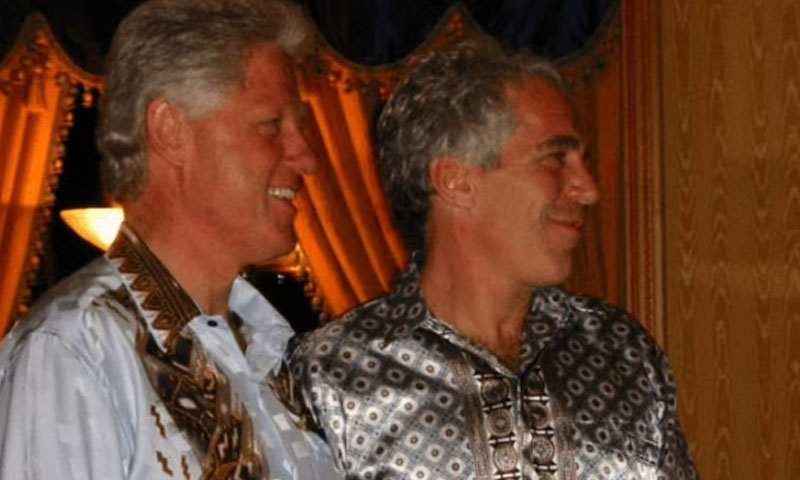
The documents include photographs of high-profile political figures and celebrities, quickly triggering sharp reactions across Washington’s partisan divide.
What has been released
On Friday afternoon, the US Department of Justice published a link to what it calls the “Epstein Library.” The collection includes four categories of records: court filings, Department of Justice disclosures — which make up the bulk of the release — Freedom of Information Act materials, and documents from a US House oversight committee.
Deputy Attorney General Todd Blanche said several hundred thousand documents would be released, with hundreds of thousands more to follow in the coming weeks. Despite those assurances, Friday’s release contained roughly 3,900 files, many of which appear to have been made public in earlier disclosures.
Among the newly released materials are photographs not previously seen, depicting politicians and celebrities. The files also include surveillance video from inside the New York detention facility where Epstein died by suicide in 2019 while awaiting trial on federal sex trafficking charges.
What the files show — and don’t show
Much of the content is obscured by extensive redactions, limiting its usefulness. A list of 254 alleged masseuses, for example, is completely blacked out.
Other documents offer little context, making their significance difficult to assess. Some files contain censored images of nude or scantily clad individuals, while others show Epstein and unidentified companions, their faces obscured, posing with firearms.
The broader expectation is that the records will shed light on Epstein’s network of associates — which included business leaders, academics, celebrities, and politicians — potentially including President Donald Trump. Trump previously acknowledged knowing Epstein but has said he severed ties with him years before Epstein’s 2019 arrest.
High-profile figures named
The release includes several photographs of former president Bill Clinton, taken years ago. One image shows Clinton reclining in a hot tub with another individual whose face has been obscured.
Other well-known figures appearing in the documents include musicians Michael Jackson, Diana Ross, and Mick Jagger, all pictured alongside Clinton. Additional figures referenced include Prince Andrew, his former wife Sarah Ferguson, actor Kevin Spacey, and British businessman Richard Branson.
Political fallout
Reaction in Washington has been sharply divided.
The White House highlighted Clinton’s presence in the photos. Communications Director Steven Cheung posted on X: “Slick Willy! @BillClinton just chillin, without a care in the world. Little did he know…”
Administration officials also portrayed the release as evidence of transparency.
Democratic Senate Minority Leader Chuck Schumer, however, criticized the disclosure as incomplete and misleading. “Simply releasing a mountain of blacked-out pages violates the spirit of transparency and the letter of the law,” he said, noting that one document was entirely redacted across 119 pages.
Criticism also emerged from within Republican ranks. Representative Thomas Massie, who co-sponsored the law mandating the release alongside Democrat Ro Khanna, accused Attorney General Pam Bondi of withholding specific documents.
Former Trump ally Marjorie Taylor Greene, who has since left Congress, said the purpose of the release was undermined by efforts to shield powerful figures. “The whole point was not to protect the ‘politically exposed individuals and government officials,’” she said.
You May Also Like