- Web Desk
- Dec 27, 2025
Pakistan signs MoU with Binance to explore tokenisation of $2bn in assets
-

- Web Desk
- Dec 12, 2025
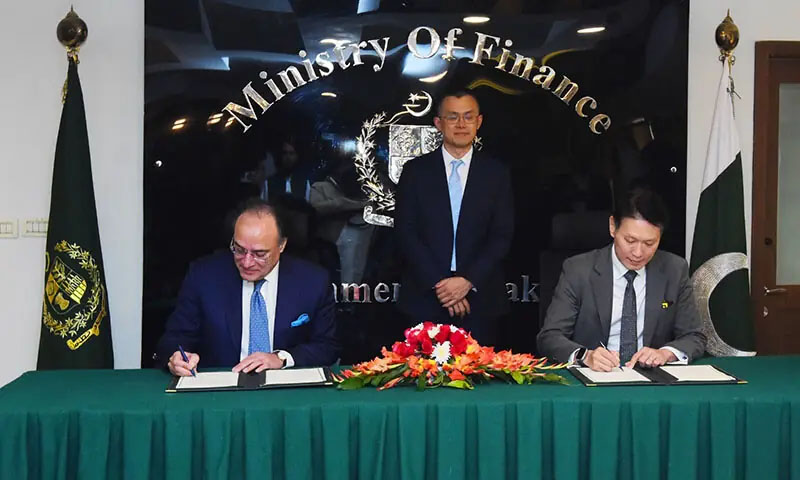
KARACHI: Pakistan has signed a memorandum of understanding with global crypto exchange Binance to explore the tokenisation of up to $2 billion worth of sovereign bonds, treasury bills and commodity reserves, the finance ministry said on Friday. The move aims to improve liquidity and draw foreign investment into the country’s financial markets.
In a separate development, Pakistan has also granted initial regulatory clearance to Binance and HTX—another major digital-asset platform—to register locally and begin preparations for formal virtual-asset exchange licence applications, according to the Pakistan Virtual Assets Regulatory Authority (PVARA).
The finance ministry said the MoU sets the stage for potential collaboration on blockchain-based distribution of Pakistan’s real-world assets. These could include government-owned bonds, T-bills and commodity reserves such as oil, gas, metals and other raw materials. Tokenisation refers to converting physical assets into digital tokens that can be traded more easily.
The development comes as countries including the UAE, Japan and parts of the European Union roll out structured licensing frameworks for crypto platforms amid tightening global regulations.
According to the ministry, Pakistan’s tokenisation initiative—subject to approvals—could cover assets of up to $2 billion, with the goal of enhancing market transparency, liquidity and access to global investors.
Finance Minister Muhammad Aurangzeb described the agreement as a sign of Pakistan’s reform momentum and “a long-term partnership.”
Binance founder Changpeng Zhao welcomed the move, calling it “a great signal for the global blockchain industry and for Pakistan,” and said the MoU marked the start of full-scale deployment of tokenisation in the country.
Initial clearances for Binance, HTX
PVARA said it had issued early-stage approvals to both exchanges after reviewing their governance standards and compliance systems. The clearance allows them to register with Pakistan’s anti-money laundering framework, set up local subsidiaries and begin submitting full licence applications.
Chairman Bilal bin Saqib said the phased licensing process would reward platforms with strong compliance track records.
Broader digital-asset initiatives
The developments come as Pakistan accelerates its digital-finance overhaul, establishing the Pakistan Crypto Council, setting up the Virtual Assets Regulatory Authority, and drafting a comprehensive virtual-asset licensing regime.
Pakistan is currently the world’s third-largest crypto market by retail activity, Saqib noted during Binance Blockchain Week in Dubai earlier this week.
A pilot for a central bank digital currency and a new Virtual Assets Act are also scheduled for 2025.
In April, the finance ministry said Pakistan’s Crypto Council had signed a letter of intent with US-based World Liberty Financial to explore stablecoin use, tokenisation and other digital-asset infrastructure.
You May Also Like