
- Aasiya Niaz
- 5 Hours ago
Pakistan’s mobile production drops sharply due to 18% sales tax
-

- Web Desk
- Nov 26, 2025
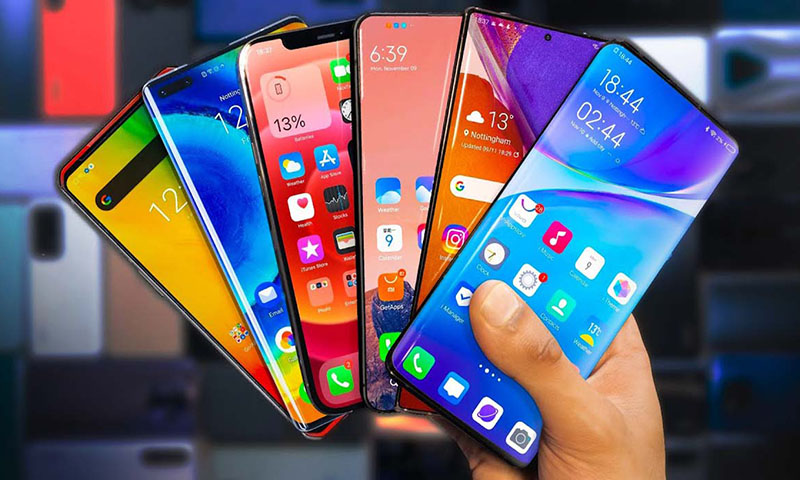
The introduction of an 18 percent sales tax on mobile phones is beginning to reshape Pakistan’s mobile market, slowing local production and dampening consumer demand.
Data from the Pakistan Telecommunication Authority (PTA) shows that locally assembled phone output fell sharply in October, dropping 34 percent from the same month last year.
Monthly manufacturing of mobile phones decreased to 2.33 million units in October from 3.53 million in October 2024. It also represented a 23 percent decline compared with September, signalling a slowdown after months of high roll-out.
Experts attribute the initial surge in production earlier this year to retailers and distributors stocking up ahead of the 2025-26 budget announcement.
“Distributors and retailers were carrying excess inventory, and the 18 percent sales tax has pushed up prices, discouraging buyers,” said Zeeshan Mianoor, Deputy Vice-Chairman of the Pakistan Mobile Phone Manufacturers Association (PMPMA). He added that manufacturers have consequently scaled back production to prevent further stock build-up.
Despite the recent dip, cumulative local production for the first ten months of 2025 is expected to reach 25.11 million units. Of these, smartphones account for 13.2 million, or 53 percent, while 11.9 million are feature phones. Currently, more than 97 percent of phones sold in Pakistan are locally produced.
The PTA’s Device Identification, Registration, and Blocking System (DIRBS) has also played a role in shaping the market. By blocking non-tax-paid imported devices, it has encouraged the use of local phones.
Even so, imported phones remain a niche segment. Between January and October, commercial importers and returning residents brought in 675,177 units, with Apple iPhones topping the list at 238,712 units, followed by 208,940 Nokia feature phones.
Locally, Infinix led sales with 2.90 million units rolled out, followed closely by Vgotel with 2.74 million. Other popular brands included Vivo (2.36 million), Itel (2.13 million), Tecno (1.49 million), Xiaomi (1.42 million), and Samsung (1.32 million). Gfive remains the leading producer of feature phones, manufacturing 1.17 million units during the same period.
Industry insiders note that iPhones continue to carry a status value, with many buyers opting for older models or purchasing the latest releases as gifts. Comparatively, local phone production is far higher than imports, reflecting both affordability and regulatory measures. In 2024, 32.8 million phones were locally assembled, while only 792,208 were imported.
The market now faces a delicate balance: maintaining local production while responding to higher prices and cautious consumer spending. Analysts say the coming months will reveal whether the industry can adjust without hurting overall sales.
You May Also Like


