
- Sadiq Khan
- Yesterday
Supreme Court rejects Sindh govt petitions on deceased employees’ quota
-

- Web Desk
- Dec 26, 2025
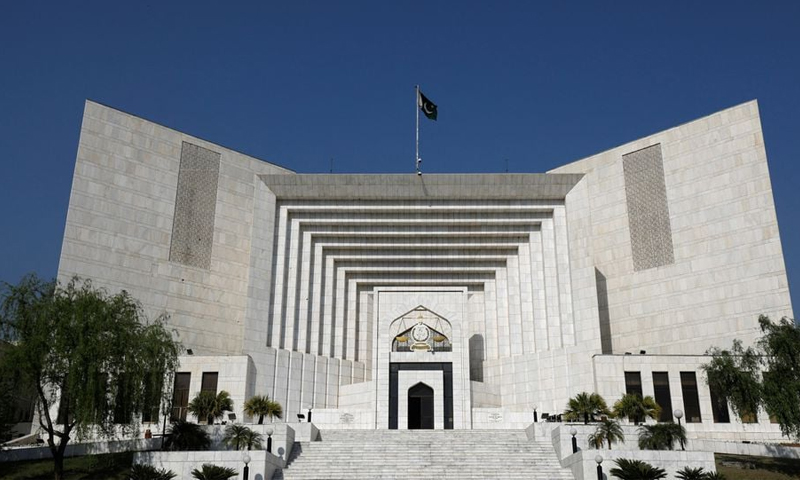
ISLAMABAD: The Supreme Court has dismissed the Sindh government’s petitions challenging appointments made under the quota reserved for families of deceased government employees, upholding the Sindh High Court’s rulings on the matter.
A three-member bench comprising Justice Muhammad Ali Mazhar, Justice Athar Minallah and Justice Salahuddin Panhwar heard the case, while Justice Muhammad Ali Mazhar authored the detailed judgment.
The apex court ruled that cases already concluded under the deceased employees’ quota cannot be reopened and noted that the Sindh High Court’s orders contained no legal defect. It further held that the annulment of quota-related laws cannot be applied retrospectively.
The court clarified that judicial decisions are ordinarily prospective in nature unless expressly stated otherwise, adding that the judgment in the General Post Office (GPO) case will not affect matters that have already attained finality.
Earlier, the Sindh High Court had directed that employment be provided to the legal heirs of deceased government employees for the period between 2019 and 2023. The provincial government challenged those directives before the Supreme Court, which has now rejected its petitions.
The Sindh High Court’s Hyderabad circuit had directed the Sindh government to consider the appointment of a petitioner under the deceased employees’ quota, ruling that rights that had already accrued before the Supreme Court’s 2024 judgment striking down such quotas cannot be denied retrospectively.
A division bench comprising Justice Muhammad Saleem Jessar and Justice Nisar Ahmed Bhanbhro issued the order while hearing a petition filed by Syed Ali Gohar Shah, whose father — an Assistant Director in the Anti-Corruption Establishment — died in service in December 2018.
The court had observed that the petitioner’s case had been recommended for appointment in 2021 but was later withdrawn without justification. It noted that the right to appointment under Rule 11-A of the Sindh Civil Servants (Appointment, Promotion and Transfer) Rules, 1974 had already accrued to the petitioner prior to the Supreme Court’s ruling in the General Post Office case.
The bench held that the Supreme Court’s judgment striking down deceased quota appointments operates prospectively and does not affect cases where rights had already crystallised, citing similar observations in the Zahida Parveen case.
The court criticised the department’s delay and “red-tapism,” terming the denial of employment discriminatory and contrary to the fundamental rights of the petitioner. It ruled that families of deceased employees could not be deprived of accrued benefits due to administrative negligence.
Allowing the petition, the court directed the Sindh government to decide the petitioner’s case for appointment in accordance with the rules applicable at the relevant time and to do so within three months.
You May Also Like