- Web Desk
- Dec 23, 2025
Year’s shortest day observed as winter solstice arrives
-

- Sadiq Khan
- Dec 21, 2025
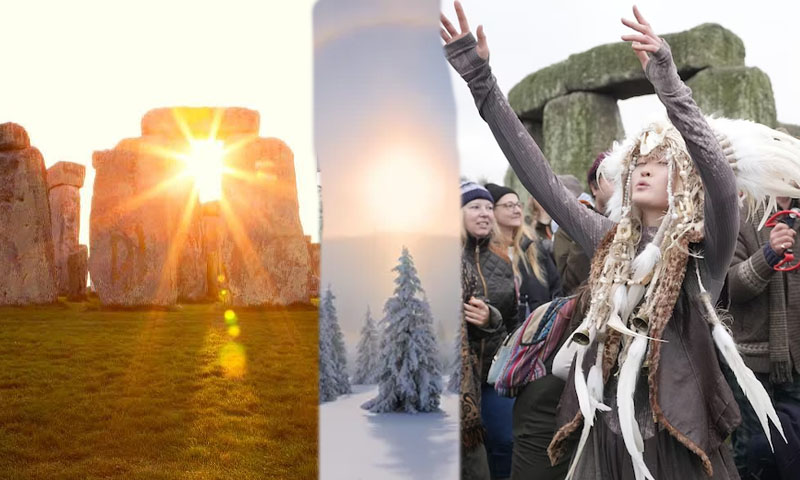
ISLAMABAD: People living in the Northern Hemisphere observed the winter solstice on Sunday, marking the shortest day and the longest night of the year. On this day, the sun reached its southernmost point in the sky, resulting in the least amount of daylight.
The winter solstice occurs every year in December in the Northern Hemisphere and is caused by the Earth’s axial tilt. During this time, as the Earth revolves around the sun, the Northern Hemisphere is tilted farthest away from it. As a result, the sun follows its lowest and shortest path across the sky, leading to fewer daylight hours and colder conditions in many regions.
Astrologists and scientists alike explain that although the solstice brings the longest night, it also signals a turning point. From Monday onward, daylight will begin to increase gradually—by just a few seconds at first—but enough to indicate the slow return of longer days, continuing until late June.
Around the world, the winter solstice is also seen as a time of renewal and reflection. Many people gather at ancient sites to mark the occasion. One of the most notable locations is Stonehenge, where the monument was specifically designed to align with the movement of the sun during solstices. Built between 5,000 and 3,500 years ago, it held great significance for ancient farming communities.
According to English Heritage, around 8,500 people gathered on Saturday at the historic site on Salisbury Plain, located about 75 miles (120 kilometres) southwest of London, to celebrate the winter solstice. The organisation added that its live stream of the event attracted more than 242,000 viewers from across the globe.
The winter solstice serves as a reminder that even in the depths of darkness, the return of light has already begun.
You May Also Like



- Web Desk
- Dec 20, 2025
Junaid Safdar’s wedding dates announced