
- Web Desk
- Nov 12, 2025
Graduated but jobless: growing population, shrinking jobs in Pakistan
“I did everything they told us to do, I studied, I graduated, I applied everywhere. Still, every morning I wake up unemployed,” says Alam Khan, a 26-year-old commerce graduate from Quetta.
His words open a window into Pakistan’s growing employment crisis, one deeply linked to rapid population growth and limited job creation. As the country’s population crosses 241 million, millions of young people enter the labour market each year, while opportunities fail to keep pace.
Pakistan is experiencing one of the largest youth bulges in South Asia. Nearly 64% of the population is under the age of 30, turning population growth into a decisive factor shaping employment trends. According to the Labour Force Survey 2024-25, Pakistan’s unemployment rate stands at around 7.1%, representing nearly 8 million jobless citizens, with youth and women disproportionately affected.
BALOCHISTAN, EDUCATED BUT EXCLUDED
In Quetta, higher education has not translated into employment. Alam Khan explains, “Every year thousands of students graduate here, but industries don’t grow. Government jobs are few, and private companies barely exist.”
Balochistan’s scattered population, weak industrial base, and lack of private investment limit employment absorption. Despite having a relatively smaller population than other provinces, its youth population is growing faster than job opportunities, intensifying frustration and outward migration.
While Balochistan’s challenges stem from geographical isolation and limited industrial presence, population-driven employment stress is not confined to remote regions alone. Even in Pakistan’s most fertile and economically active province, the pressure of a growing population is quietly reshaping livelihoods in unexpected ways.
NORTHERN PUNJAB, POPULATION PRESSURE ON AGRICULTURE
In a village near Gujranwala, 27-year-old Naveed Iqbal sits idle despite being from an agriculturally rich region. “Our land feeds the country, but it no longer feeds our families,” he says. “Machines have replaced labour, and educated people like me have nowhere to go.”
Punjab’s dense population has divided landholdings into uneconomical sizes. With agriculture absorbing fewer workers and urban centers already saturated, rural youth face rising unemployment or forced migration.
As rural youth from Punjab confront shrinking agricultural opportunities, many look toward cities with hope. The promise of urban employment draws thousands every month, turning megacities into magnets for ambition, and sites of intense competition.
KARACHI: OVERPOPULATION AND INFORMAL EMPLOYMENT
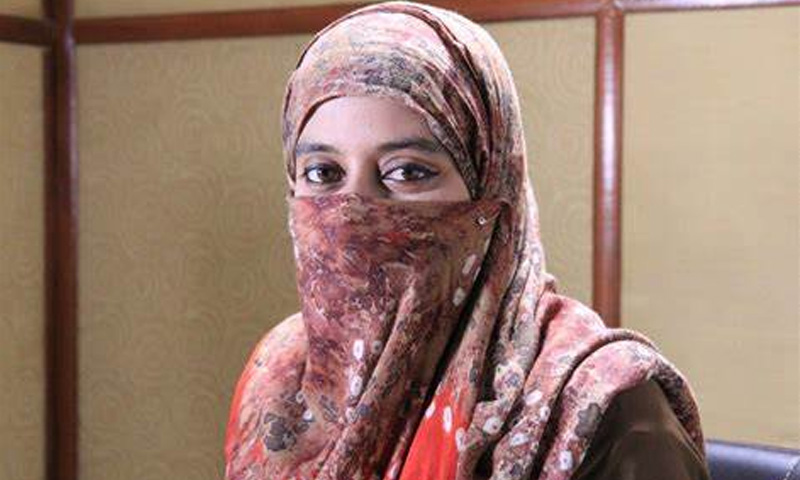
Karachi receives thousands of migrants every month. For many, employment means survival in the informal economy. Ayesha Bano, a master’s degree holder working as freelancer said:
“I studied economics, but I earn less than a living wage. Karachi has jobs, but not enough dignified, formal jobs for everyone coming here.”
The city’s ballooning population has created intense competition for limited formal employment. As a result, informal work dominates, offering little job security or social protection.
Yet not everyone migrates by choice, nor does every province offer the pull of a metropolis. In regions where industry is scarce and mobility is limited, population growth creates a quieter but deeper employment crisis.
KHYBER PAKHTUNKHWA: YOUTH WITHOUT OPTIONS
Khyber Pakhtunkhwa reports one of the highest unemployment rates in Pakistan, particularly among youth. In Swat, 25-year-old graduate Ehtisham Khan voices his despair:
“Our population is growing, but industries are not. Most of my friends want to leave the province because there is nothing for us here.”
Security challenges, limited industrialization, and rapid population growth have restricted economic expansion, leaving young people trapped between education and unemployment.
POPULATION AND EMPLOYMENT
Pakistan’s population stands at approximately 241.5 million, with the labour force expanding by nearly two million new entrants each year. However, employment generation has failed to keep pace with this rapid growth, resulting in a national unemployment rate of around 7.1 percent.
The situation is even more severe among the youth, whose unemployment rate is significantly higher than the national average, reflecting limited opportunities for new and skilled entrants into the job market. At the same time, female labour force participation remains low, and women who do seek employment face higher unemployment rates than men.
Together, these indicators point to a clear structural imbalance in the economy: population growth is outpacing job creation, gradually transforming what could have been a powerful demographic dividend into a growing economic liability.
VOICE OF ADVOCACY
Social rights activist Murtaza Mehsud links population dynamics directly to employment stress, “Population itself is not the problem. We have China and US with bigger populations than Pakistan but their population is an asset for them while Pakistan population is becoming a liability. The crisis begins when the state fails to plan for education, skills, and jobs. Millions of young Pakistanis are ready to work, but the system has no place for them.”
He adds, “Without serious investment in vocational training, women’s employment, and small industries, population growth will continue to deepen inequality and unemployment.”
In Pakistan, while on the one hand the rapidly growing population without any proper planning is becoming a serious problem, on the other hand, socially, the dangers of this increasing population are not being adequately recognized or felt.
Former Chairman of the Department of Economics, University of Peshawar, Dr. Zilakat Khan Malik, stated that, “Pakistan is an overpopulated country because its population exceeds the available resources, and this is the main reason why employment opportunities are decreasing day by day in the country.”
He added that, “The rapid population growth in Pakistan is driven not only by the lack of effective government policies but also by social factors. Among these, the most prominent beliefs are that having more children is seen as a sign of a strong family, or that children serve as support for parents in old age. These beliefs are further reinforced by the notion that no matter how many children one has, God has already guaranteed their sustenance. As a result, people tend to ignore the problems and risks associated with rapid population growth.”
The stories from Quetta, Punjab, Karachi, and Khyber Pakhtunkhwa share a common message, Pakistan’s population growth is colliding with stagnant job creation. Degrees pile up, aspirations grow, but employment opportunities remain scarce.
Unless population planning is aligned with economic expansion, skills development, and inclusive employment policies, Pakistan risks losing its greatest asset, its youth, to unemployment, migration, and despair.
You May Also Like