- Sadiq Khan
- Yesterday
80 per cent of drinking water in Gilgit unfit for human consumption
-

- Tanveer Abbas
- Sep 18, 2025
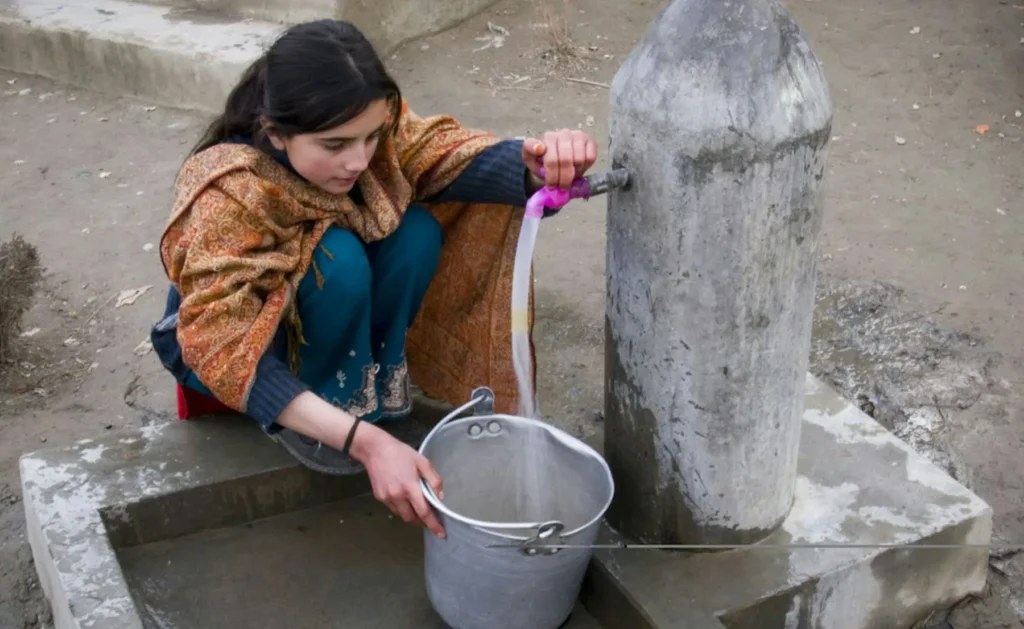
GILGIT: A report on water quality has revealed that 80 per cent of the drinking water supply across Gilgit city is bacteriologically contaminated and unfit for human consumption.
The investigation, conducted by the Gilgit-Baltistan Environmental Protection Agency (GB-EPA), was initiated after social media reports and community complaints about a sharp rise in hospital admissions for enteric fever, a severe form of typhoid.
According to the report, an Environmental Lab team of the EPA carried out detailed water quality monitoring and surveillance of the Barmas and Jutial water supply complexes, as well as the river uplift water supply systems, to ascertain the actual cause of the outbreak of waterborne diseases.
The report said that the team inspected the water intake systems at Kargah and Jutial Nullah, conducted sanitary checks of source intakes, water storage tanks, and distribution networks, and collected samples for testing.
A total of 19 water samples were analysed for bacteriological contamination from sources, inlets, storage tanks, outlets, and household taps.
Of these, 15 samples were found to be contaminated, while only four were within the permissible limits of National Standards for Drinking Water Quality (NSDWQ) and the WHO guidelines.
The report said that the Barmas and Jutial water supply complexes and uplift systems are bacteriologically contaminated, making the water unfit for human consumption.
Rain in Islamabad brings relief from heat
It said the intake system of these complexes is uncovered and unprotected, allowing easy access to livestock and other activities that cause contamination.
The Barmas intake, in particular, is highly vulnerable due to upstream human and animal activity.
It noted that Jutial Lower supply tanks are fed through open channels passing through populated areas, making them highly vulnerable to fecal contamination from both anthropogenic and livestock sources.
“The water distribution network is inadequately buried, with several sections exhibiting cracks and active leakage into open sewer channels.
This compromised infrastructure poses a significant risk of cross-contamination, as leaked pipelines may allow harmful pathogens and chemical pollutants from the surrounding sewage or runoff to infiltrate the potable water supply, thereby endangering public health,” the report warned.
According to Public Health Engineering standards, a minimum horizontal separation of 100 feet must be maintained between drinking water pipelines and sewerage lines to prevent such contamination risks. “The current proximity and structural deficiencies violate these safety norms and warrant immediate remedial action,” the report said.
It also observed that “none of the water supply complex staff is aware of chlorination and disinfection of water neither any technical staff is placed to supervise this very critical drinking water supply system of Gilgit city.”
The report urged the immediate provision of chlorine, equipment and chemicals to the relevant departments so that water treatment could be carried out in line with national and international standards.
In the long run, the report recommended protective engineering interventions for the Kargah and Jutial water sources, including the covering of intake channels and storage tanks and the establishment of proper chlorination and disinfection protocols.
It also emphasized the need to repair and bury pipelines at safe distances from sewage lines and to ensure they remain free of cracks or leakages. At the household level, the report suggested the use of aqua tablets to treat water and reduce contamination risks.
It also called for awareness sessions at the community level on hygienic practices and water treatment methods, and recommended deploying lady health visitors, lady health workers and other staff of the health department to conduct such awareness campaigns.
Girl, boy killed for ‘honour’, houses torched in Tirah Valley
You May Also Like