- Web Desk
- 7 Hours ago
Cricket, conflict, and controversy: How war rhetoric and misogyny collided between India and Pakistan
-

- Web Desk
- Oct 09, 2025
By Urooj Mansab Khan
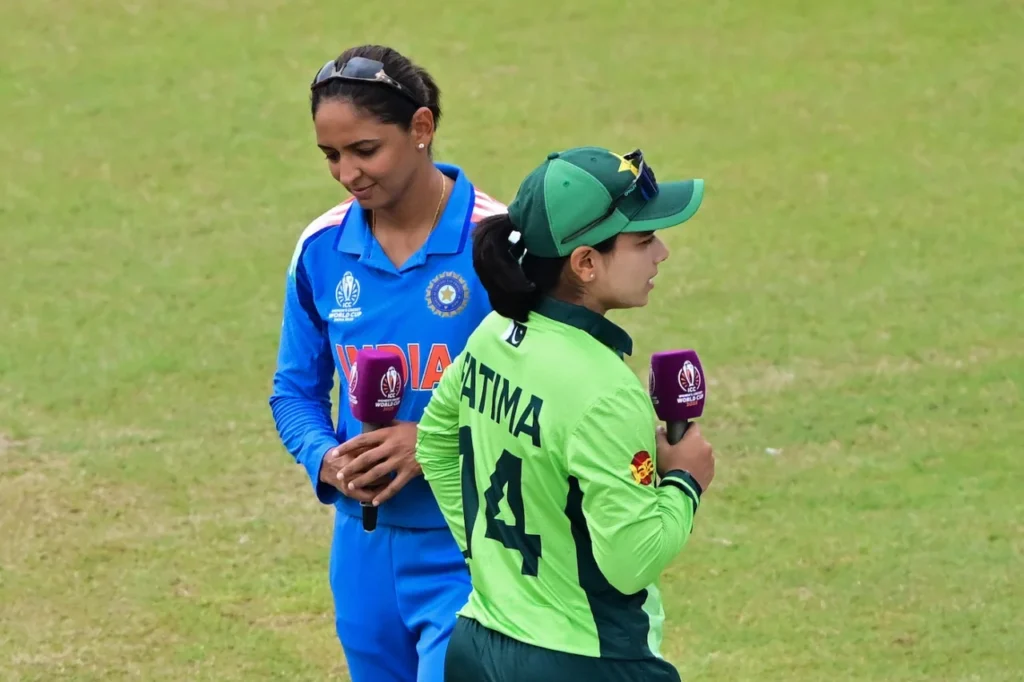
In South Asia, sport is rarely just sport. Cricket, in particular, has long been the vessel for political anxieties, historical wounds, and moments of nationalist triumph. For the fourth consecutive Sunday, Indian and Pakistani cricket teams met. This time, the women’s teams played under the weight of the aftermath of Asia Cup hostilities. A significant moment in women’s cricket had a chance of being mired in symbolism far larger, and darker, than the game itself.
There has never been such a thing as an ordinary India vs Pakistan match. But this time, it was even more different. Not because of the scoreline, not because of the venue, and certainly not because of the stakes.
What set the encounter apart is the way it bled far beyond the boundary into nationalistic fervour and gendered vitriol. And, perhaps most revealingly, into the lives of two women whose only crime was to celebrate their excellence on a cricket field.
A celebration misread
At the heart of the controversy are two cricketers: Sidra Amin, with a composed century, her sixth in ODIs, and Nashra Sandhu, who claimed a stunning six-wicket haul, contributing to Pakistan’s only victory over South Africa during last month’s ODI series.
In isolation, the numbers speak to rare achievement. Sandhu’s 6 for 26 was one of the finest spells in Pakistan’s women’s cricket history. Amin’s hundred was a masterclass in calm under pressure. Together, their performances symbolised a watershed moment for a side long seen as lagging behind its rivals.
But their excellence was not the story that took hold. Instead, attention shifted, almost immediately and with fierce intensity, to the number six.
A number recast in wartime rhetoric
It began with a celebration. As Sandhu raised her arms after her sixth wicket, the pose, generic by most cricketing standards, was seized upon and reinterpreted through the lens of conflict. On any other occasion, these achievements might have been celebrated as personal milestones, a marker of consistency and excellence in a field where Pakistan has struggled to establish global parity. Instead, the raised bat, broad smile and gesture of celebration were thrust into the furnace of politics.
Pak-W vs Aus-W: Pakistan Women to chase 144 in 9th clash of ICC CWC
Indian social media spaces, already inflamed by weeks of televised war coverage and jingoistic hashtags, rebranded the moment as a reference to the “6-0” assertion made by the Pakistan Air Force in its presser during the military altercation in May.
The coincidence of numbers was enough.
Within hours, screenshots of Sandhu’s celebration were spliced with combat footage. Amin’s hundred, her sixth, was recontextualised as part of the same supposed symbolism. The match, and its protagonists, were no longer about cricket. They were about coded aggression, national affront, and alleged military taunts. None of the players said anything to suggest this.

But in an atmosphere so primed for outrage, silence was filled with speculation.
Cricket as proxy
This is not the first time cricket between these two countries has borne the weight of symbolism. Men’s fixtures are often described as proxy wars, their outcomes viewed as metaphors for national strength. But what is striking in this episode is how quickly the discourse slid into misogyny once the protagonist was a woman. Instead of focusing on their batting and bowling craft, the footwork, the shot selection, the resilience under pressure, the conversation degenerated into insults about the gender, appearance, and supposed political allegiances.
When misogyny takes the reins
That slide was telling. When male cricketers are accused of politicised gestures, they are debated, sometimes vilified, but largely within the frame of nationalism. With women, the scrutiny takes on an added layer: it questions their right to even occupy the stage. The players in question were not just criticised; they were ridiculed with sexist memes, cast as an unworthy symbol, and reduced to caricatures. Their cricketing identity became almost secondary.
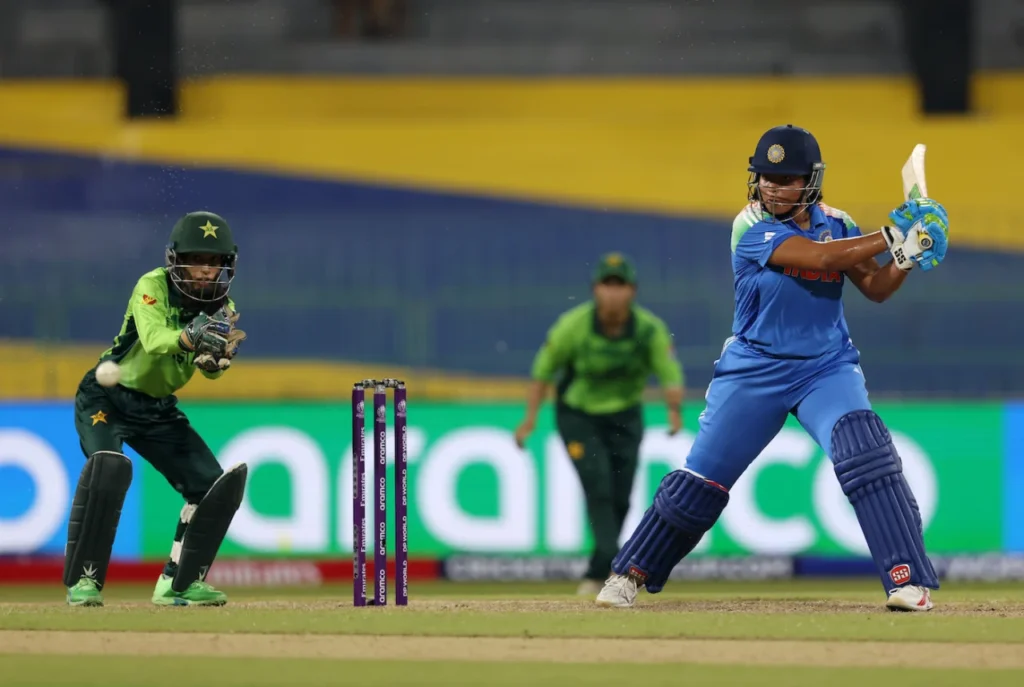
The timing, too, mattered. The war had already deepened existing hostility, making the cricketing arena an extension of the battlefield in the public imagination. Politicians fanned the flames, media outlets recycled the imagery of fighter jets alongside their celebration, and social media amplified the narrative that their achievements were not sporting milestones but coded provocation.
The forgotten spirit of cricket
Yet what was missing from the conversation was the game itself. These are players who had fought through years of underinvestment in women’s sport, limited facilities, and the constant burden of comparison with the men’s game. Reaching six centuries in such a context is no small feat, nor is the six wicket haul; it places them among the most successful players Pakistan has produced. But that story was lost in the noise.

The treatment of the milestone also revealed something broader: how women’s sport is still perceived in South Asia. Too often, it is tolerated rather than celebrated, viewed through the prism of either tokenism or political convenience. When the women’s team wins, their success is appropriated as a symbol of national pride. When they lose, they are dismissed as irrelevant. And when, as in this case, they inadvertently brush against political narratives, the fallout is disproportionately personal and gendered.
More than just a game
This is not unique to cricket. Across the world, female athletes are subjected to layers of commentary their male counterparts rarely face. Their bodies, clothing, expressions, even celebrations, are policed. In South Asia, where sport is already entwined with identity politics, the effect is magnified. The Pakistani batter’s sixth century could have been a moment to inspire younger girls to pick up a bat. But the tragedy of this episode is twofold.
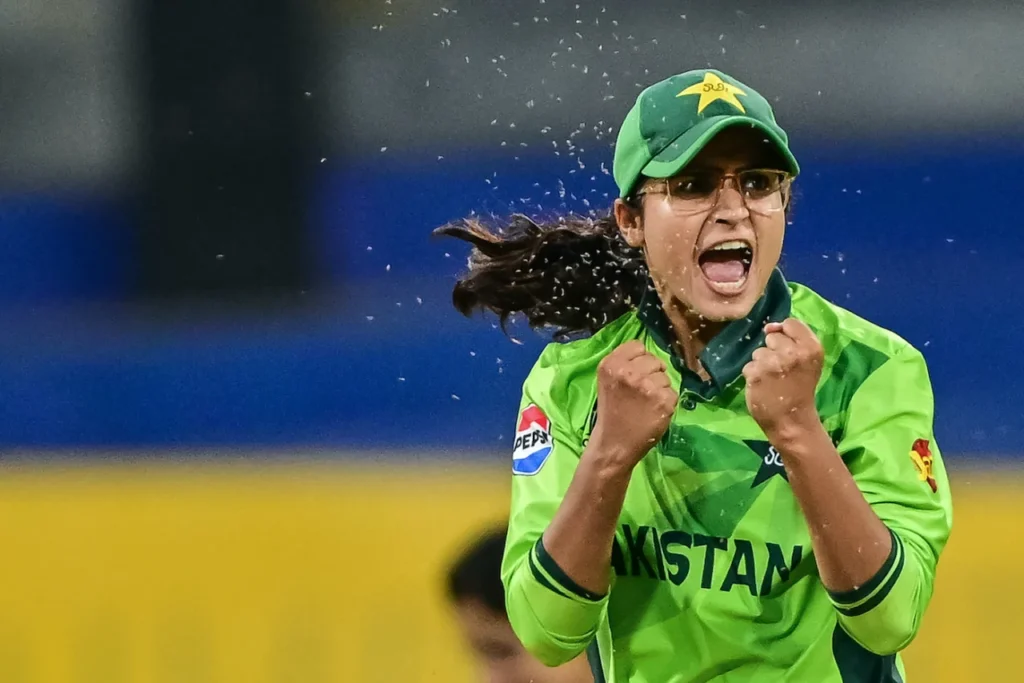
First, it robbed players of their rightful recognition. Second, it exposed how fragile the discourse around women’s sport remains. Instead of advancing conversations about skill, training, or strategy, the narrative was hijacked by symbols of war and saturated with misogyny. The players were left silent in the eye of a storm they had not intended to create.
What needs to change
Cricket between India and Pakistan will always carry political baggage; that is unlikely to change. But what this controversy shows is that when women are at the centre of it, the burden doubles. They are not only asked to represent their nation, but also forced to defend their gender. Until that changes, every achievement, no matter how brilliant, risks being recast as something else.

For women’s cricket to grow in the region, it requires space to be judged on its own terms. A century should be a century, not a cipher for war. A celebration should be a personal expression, not a national statement. And a woman at the crease should be a cricketer first, not a pawn in the endless game of symbolism that India and Pakistan too often play.
You May Also Like