- Web Desk
- 10 Hours ago
UNSC fails to reach consensus as Israeli-Palestinian conflict escalates
-

- Web Desk
- Oct 09, 2023
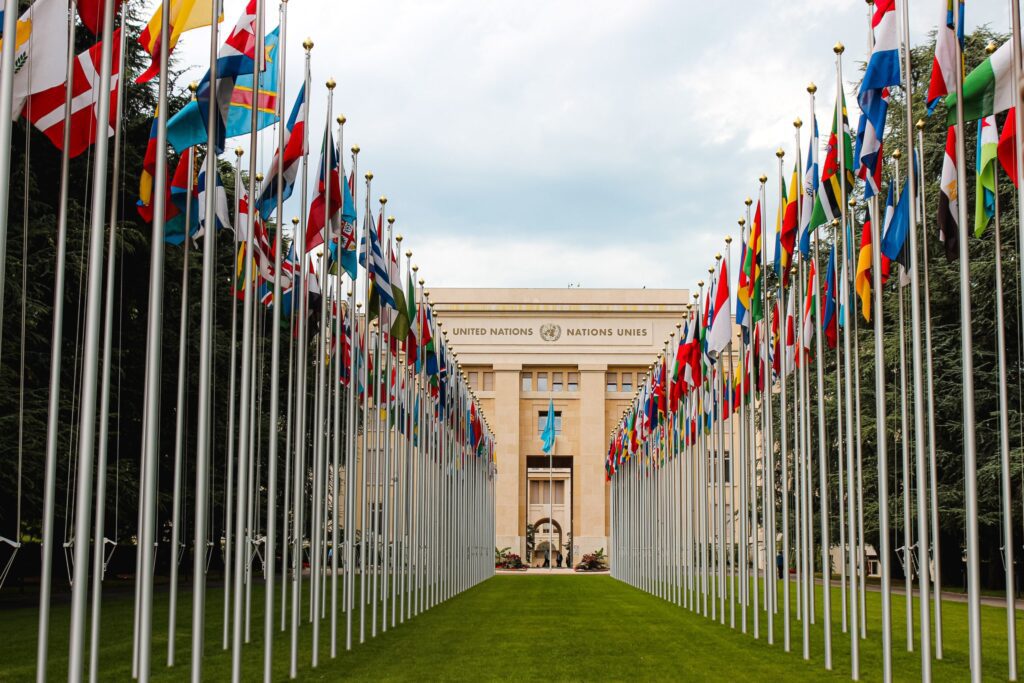
UNITED NATIONS: An emergency session of the United Nations Security Council (UNSC) convened on Monday has concluded without the adoption of any concrete measures to address the intensifying conflict between Israel and Hamas.
The crisis was ignited by a surprise assault by Hamas fighters on Israeli border towns, prompting a lethal Israeli response with air strikes in Gaza and tragically raising the death toll to 1,100.
Diplomatic source have revealed that the United States, a member of the UNSC, pressed for a joint statement from the 15 Council members, strongly denouncing what it termed “heinous terrorist attacks committed by Hamas.” However, achieving unanimity among the Council members proved elusive.
A unanimous consensus is essential for the UNSC to issue any official statement or binding resolution on the matter.
Following the closed-door session, US Deputy Ambassador Robert Wood acknowledged that “a significant number of countries” did condemn the Hamas attack, but not every member of the council shared that viewpoint. He refrained from specifying the dissenting nations, leaving it to reporters to discern.
Sources within the UNSC have indicated that the council did not deliberate on a joint statement, let alone a binding resolution. Russia, among others, advocated for a broader focus that extended beyond condemning Hamas.
Vassily Nebenzia, the Russian Ambassador to the United Nations, expressed his perspective, stating, “My message was to stop the fighting immediately and to call for a ceasefire and meaningful negotiations, as the Security Council has advocated for decades. This is partly the result of unresolved issues.”
China, on the other hand, voiced its support for a collective statement. Ambassador Zhang Jun emphasized the abnormality of the Security Council’s silence and earlier pledged Chinese backing for condemning “all attacks against civilians.” Zhang stressed the importance of preventing further escalation and returning to a two-state solution.
The UNSC convened for approximately 90 minutes, during which UN Middle East peace envoy Tor Wennesland provided a briefing.
The United Arab Emirates, which normalized relations with Israel in a historic 2020 agreement, anticipated further UNSC meetings on the ongoing crisis.
UAE Ambassador Lana Zaki Nusseibeh underscored the grave concern surrounding the situation and underscored the belief among many council members in the necessity of a political path leading to a two-state solution.
Palestinian Ambassador Riyad Mansour urged diplomats to prioritize ending the Israeli occupation. He criticized the tendency of some media and politicians to only engage with the conflict when Israeli casualties occur and called for a change in Israel’s course towards peace.
Three Palestinian human rights organizations, namely Al-Haq, Al-Mezan Centre for Human Rights, and the Palestinian Centre for Human Rights, sent an open letter to UNSC members prior to the meeting.
They accused the UN of inaction that enabled the latest violence and argued that its members were “complicit” in the unfolding events.
These organizations urged UN member states to address the root causes of the conflict and protect the Palestinian population from Israeli attacks.
You May Also Like